
Get in Touch
Email Us
info@smartlogics.inReach Out
+91-9760730500Find Us
Corporate Office
420, NH 58, Gayatri Garden Partapur Bypass,
Meerut, Uttar Pradesh, 250002 (India)
Oct 29, 2026
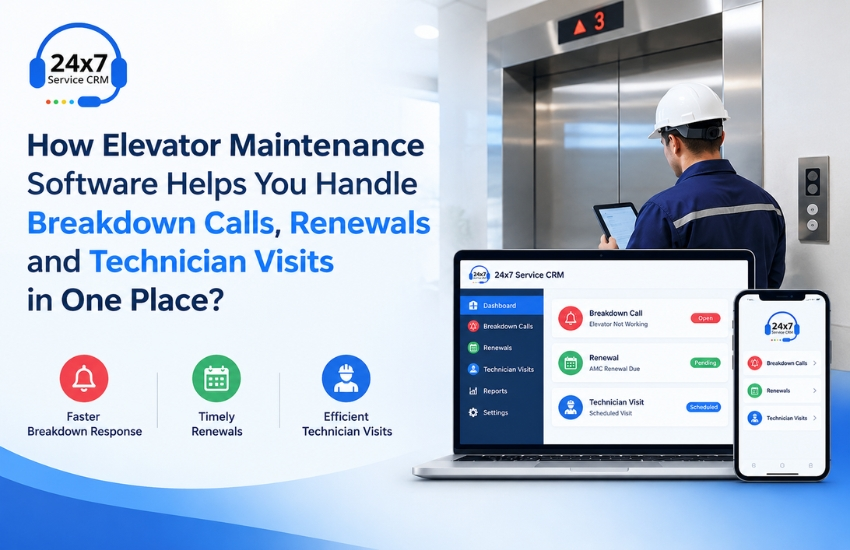
The elevator maintenance sector requires prompt servicing, dependable equipment performance, and seamless communication among customers, technicians, and service managers. Elevators installed in residential complexes, commercial properties, hospitals, hotels, and industrial buildings need routine inspections and preventive servicing to ensure safe, smooth, and reliable operation. However, managing breakdown calls, annual maintenance contract (AMC) renewals, technician visits, and customer follow-ups through spreadsheets, phone calls, and paper records can quickly become complicated. This is where Elevator Maintenance Business Software can make a difference. Elevator Maintenance Software simplifies service management by bringing maintenance tasks, customer complaints, technician scheduling, and AMC contracts together on a single platform.
By combining Elevator Service Software with integrated Service CRM features, elevator maintenance companies can streamline daily operations, minimise manual paperwork, improve team coordination, and maintain better control over customer service activities.
This blog explains how elevator maintenance software helps businesses efficiently handle breakdown requests, AMC renewals, technician assignments, and routine maintenance schedules.
What Is Elevator Maintenance Software?
Elevator Maintenance Software is a digital management system that enables elevator service providers to organise, monitor, and streamline lift maintenance, repair requests, technician activities, and customer service operations. It provides a structured way to record customer details, maintain elevator asset information, schedule preventive maintenance, track breakdown complaints, and monitor technician assignments.
Instead of managing separate records for customers, contracts, and service visits, businesses can use one platform to organise important information and follow service activities from request to completion.
Depending on its features, Elevator Service Software may also support spare-parts tracking, digital service reports, maintenance reminders, billing workflows, and performance dashboards.
When connected with Elevator Business Management Software Service CRM, it can help service teams manage customer communication and contract-related activities alongside technical service field operations.
1. Manage Elevator Breakdown Calls Without Missing Requests
Unexpected elevator breakdowns require prompt attention, clear communication, and proper coordination. When complaints arrive through phone calls, emails, messaging apps, and other channels, service teams can struggle to track every request.
Elevator Maintenance Business Software Service CRM helps create a structured process for recording and monitoring breakdown complaints. A service request can include the customer name, building location, elevator identification, reported problem, complaint time, and assigned technician.
Teams can then monitor the complaint's status, such as:
- New complaint received.
- Technician assigned.
- Visit scheduled or in progress.
- Repair completed.
- Follow-up required.
This visibility helps managers identify unresolved complaints and coordinate the next steps.
For urgent breakdowns, businesses should establish appropriate escalation procedures and response priorities. Software supports coordination, but it does not replace emergency protocols, qualified personnel, or required safety procedures. Passengers trapped in an elevator should be directed to the appropriate emergency response process immediately.
2. Schedule Preventive Maintenance Visits in Advance
Preventive maintenance is essential for monitoring lift and elevator condition, identifying potential issues, and maintaining service records. Missing planned visits can create operational risks and lead to avoidable service disruptions.
Elevator Service Software helps companies organise recurring maintenance schedules according to their service agreements, equipment requirements, and applicable maintenance procedures.
Managers can view upcoming visits, assign technicians, and monitor overdue tasks. Automated service reminders, where supported, can help field teams prepare for scheduled inspections and routine servicing.
A well-organised maintenance calendar helps businesses:
- Plan technician workloads more effectively.
- Reduce missed or delayed maintenance visits.
- Maintain consistent service documentation.
- Track completed and pending maintenance tasks.
- Improve visibility across multiple buildings and locations.
For companies managing hundreds of elevators, a centralised schedule can be considerably easier to maintain than separate spreadsheets or manual calendars.
3. Track Annual Maintenance Contracts and Renewals
Annual Maintenance Contracts are an important part of many elevator service businesses. Managing multiple contracts requires accurate information about contract start dates, expiry dates, coverage, renewal terms, and customer communication.
When contract details are spread across multiple documents and emails, service teams may miss renewal deadlines or delay customer follow-ups.
Elevator Maintenance Business Software can help centralise contract records and highlight upcoming renewal dates. Depending on the platform, managers may configure reminders for contracts approaching expiry and assign follow-up tasks to the appropriate team.
Useful contract details may include:
- Customer and building information.
- Elevator identification and location.
- Contract start and end dates.
- Agreed maintenance coverage.
- Renewal status and follow-up history.
- Relevant billing or payment information.
With Service CRM capabilities, teams can also maintain a record of customer discussions and renewal follow-ups.
This helps businesses streamline contract renewals, strengthen customer communication, and efficiently track the status of service agreements. Renewal reminders do not guarantee that a contract will be renewed, but they help teams act at the right time.
4. Assign Technician Visits and Monitor Job Progress
Coordinating technician visits is challenging when service teams handle multiple breakdown calls, routine maintenance jobs, and customer appointments every day. Without a centralised system, managers may struggle to identify technician availability, assign the right person, and monitor pending work.
Elevator Service Software helps managers assign service jobs based on technician availability, skills, location, and job priority. Technicians can view assigned tasks, check maintenance instructions, and update service status using the software’s available mobile features.
Service managers can monitor these updates, track pending jobs, adjust technician assignments, and keep customers informed about service progress.
For instance, when a repair requires replacement components, technicians can record the issue, specify the required parts, and document the next steps directly in the system. The service team can then coordinate parts availability and schedule a follow-up visit.
This structured workflow improves visibility and reduces dependence on repeated phone calls to determine the status of every job.
5. Keep Elevator Service History in One Place
Each elevator has its own maintenance history, equipment details, repair requirements, and service records. Access to this information helps technicians understand previous issues and plan appropriate maintenance activities.
Elevator Maintenance Business Software can maintain centralised records for each elevator, including:
- Equipment model, identification, and installation details.
- Building and customer information.
- Previous breakdown complaints.
- Preventive maintenance records.
- Repair activities and parts replaced.
- Technician observations and service reports.
- Contract and warranty information, where applicable.
When handling a repeated service issue, technicians can refer to past maintenance records to understand previous repairs and diagnose the problem more efficiently.
Centralised records also help service managers identify recurring faults, review maintenance patterns, and make better-informed decisions about inspections and repairs.
6. Improve Customer Communication with Service CRM
Customer communication is a vital part of lift and elevator maintenance. Building managers, housing societies, facility managers, and commercial property owners need clear updates about complaints, scheduled visits, repairs, and contract renewals.
Service CRM helps elevator service companies organise customer information, service interactions, and follow-up activities in one place.
This can help businesses:
- Maintain organised customer contact details.
- Track complaint-related communication.
- Schedule contract renewal follow-ups.
- Record customer feedback and service discussions.
- Improve visibility into outstanding customer requests.
For example, when a building manager calls about a pending repair, the service representative can review the available complaint history and provide a more informed update.
Better access to customer information helps reduce communication gaps and supports a more consistent service experience.
7. Reduce Administrative Work and Improve Reporting
Manual recordkeeping can take considerable time when service companies manage multiple technicians, customers, contracts, and maintenance schedules. Staff may need to update spreadsheets, prepare reports, and reconcile information from different sources.
Elevator Service Maintenance Software can automate or simplify many routine administrative tasks. Digital work orders, maintenance logs, contract reminders, and service reports help reduce repetitive data entry.
Reporting tools can also help managers monitor important operational indicators, including:
- Number of open and resolved breakdown complaints.
- Preventive maintenance completed on schedule.
- Pending and overdue technician visits.
- Contracts approaching their expiry dates.
- Repeat complaints and recurring equipment issues.
- Technician workloads and service completion trends.
These insights help management identify bottlenecks and improve resource planning. Accurate records are essential, so technicians and office staff should update job information consistently.
8. Manage Multiple Buildings and Customers More Efficiently
Elevator maintenance providers service lifts in residential complexes, commercial offices, hospitals, malls, hotels, and industrial buildings. As their customer network expands, managing equipment records and maintenance contracts becomes increasingly challenging.
A flexible Elevator Service Software platform simplifies operations by centralising customer information, property details, elevator records, service schedules, and AMC agreements in one system.
Managers can use this information to coordinate work across different locations and review service activity without relying on disconnected records.
Before choosing a solution, businesses should confirm that it supports their required number of customers, equipment records, users, and service locations.
Essential Features to Look for in Elevator Maintenance Business Software
When comparing software solutions, elevator service providers should focus on the features that address their daily operational challenges.
- Breakdown management: Record complaints, prioritise requests, and track resolution.
- Preventive Maintenance Scheduling: Organise routine service appointments, track upcoming inspections, and identify pending maintenance tasks.
- AMC Management: Manage maintenance agreements, monitor contract validity, and streamline renewal reminders.
- Technician Management: Allocate service requests, coordinate field technicians, and track job completion status.
- Elevator Asset Management: Maintain centralised equipment information, repair records, and complete maintenance histories.
- Customer Record: Organise customer information and communication.
- Digital service reports: Document inspections, repairs, and technician observations.
- Notifications and reminders: Alert teams about scheduled visits and upcoming renewals.
- Reporting and Analytics: Monitor service efficiency, analyse maintenance trends, and detect recurring technical issues.
- Mobile Access and Data Security: Enable field technicians to manage service tasks remotely while maintaining secure access to business information.
Businesses should also evaluate software usability, employee training, technical support, data security, integration capabilities, and scalability to support future growth.
Conclusion
As elevator maintenance businesses grow, managing breakdown requests, technician assignments, preventive servicing, and AMC renewals becomes increasingly complex. Elevator Maintenance Business Software simplifies these operations by centralising service complaints, maintenance schedules, contract details, and equipment records.
Elevator Service Software streamlines maintenance activities, while Service CRM improves customer communication and service follow-ups. Together, they reduce administrative tasks, enhance team coordination, and support better business decisions.
For elevator maintenance companies aiming to improve service delivery and manage growing customer portfolios, the right software can provide a more organised foundation for long-term business growth. The best results come when technology is combined with qualified technicians, documented safety procedures, and consistent maintenance practices.
Frequently Asked Questions
Q. 1. What is Elevator Maintenance Business Software?
Ans: Elevator Maintenance Business Software is a digital platform that helps elevator service companies manage breakdown complaints, preventive maintenance schedules, technician assignments, service records, and annual maintenance contracts.
Q. 2. How does Elevator Business Software Service CRM help manage breakdown calls?
Ans: It allows service teams to record complaints, assign technicians, prioritise requests, track job progress, and maintain repair records. The software helps field teams monitor unresolved issues and coordinate responses more effectively.
Q. 3. Can elevator maintenance software track AMC renewals?
Ans: Yes. Depending on its features, the software can store contract details, track expiry dates, schedule renewal reminders, and record follow-up activities to help teams manage annual maintenance contracts.
Q. 4. How does Service CRM benefit elevator maintenance companies?
Ans: Service CRM for Elevator Company simplifies customer information management, service communication, complaint tracking, and AMC renewal follow-ups. Integrating it with maintenance workflows improves technician coordination and service request management.
Q. 5. What should businesses consider when choosing elevator service software?
Ans: Businesses should evaluate breakdown tracking, preventive maintenance scheduling, AMC management, technician assignment, elevator service history, mobile access, reporting, security, and scalability.

Let's build an
amazing project
Drop Us A Line
Why Choose SMART Logics?

14+ Year
Experience

Committed
to Quality

We’re
Affordable

Customize to
your Needs

Unconditional
Support

Satisfaction
Guaranteed

One Stop
Services

Dedicated
developers

Handle Tight
Deadlines
Let's Get Started Now!
Please fill out the quick form and we will be in touch with you at lightning speed.
SERVICES
PRODUCTS
COMPANY
Connect
SMARTLOGICS SERVICES PRIVATE LIMITED
Support
© Smartlogics Services Pvt. Ltd., 2025. All Rights Reserved.

